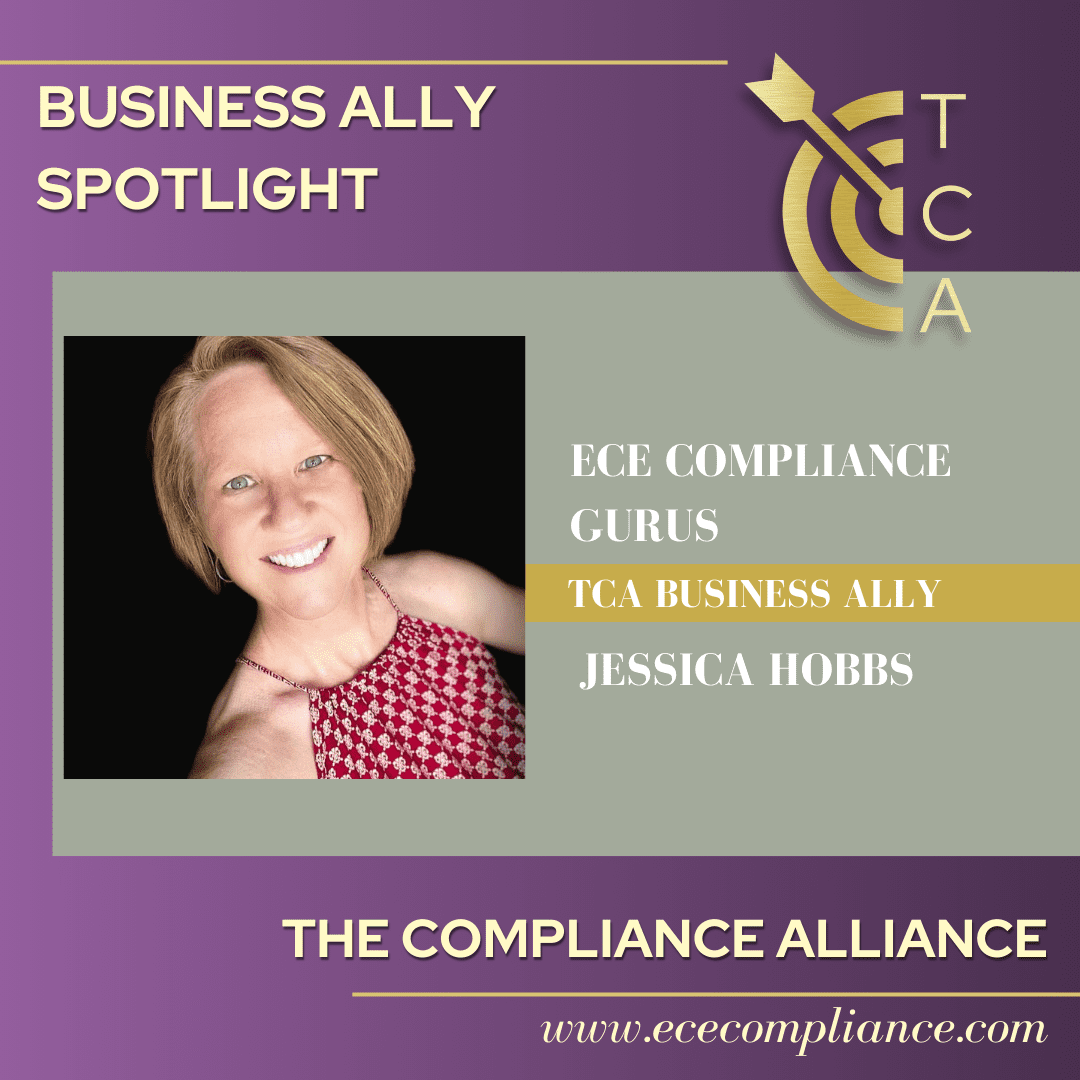
In the complex and ever-evolving landscape of early childhood education, compliance in childcare is often seen as an arduous task, a box-ticking exercise that only becomes a priority once a problem arises. However, as Jessica Hobbs, founder of ECE Compliance Gurus, explains, viewing compliance differently can bring remarkable stability and strength to your organization. “Compliance becomes a cornerstone of strength and reliability for my clients,” she shared in a recent discussion with Lynn Wenger, host of The Compliance Alliance Business Ally Spotlight series.
ECE Compliance Gurus has built its reputation by transforming how childcare facilities approach regulatory adherence. Hobbs, with over 25 years of hands-on experience in early childhood education and special education, succinctly stresses the importance of proactive compliance. Throughout her career path—from teacher to state licensor, and eventually to establishing a compliance department for a growing organization—she has seen firsthand how “what works at 30 schools doesn’t work at 200 schools.”
The Primary Challenge of Compliance In Childcare
The primary challenge, according to Hobbs, is the absence of comprehensive but user-friendly processes to uphold ongoing compliance across campuses. “They want to know the compliance health. It’s just, how do we get there?” she says, highlighting the need for a more structured and consistent approach. Indeed, her strategic direction focuses not merely on adhering to regulations but optimizing and integrating compliance infrastructures, providing both small and large organizations with seamless, efficient systems.
One intriguing aspect of Hobbs’s approach is the concept of “compliance health.” She elaborates, “How do managers and management teams see on a daily basis, or what can they see, to know that their schools are okay? It’s about creating a culture where compliance is continuously monitored and the roles are clearly defined. Awareness and accountability become pillars in ensuring each piece of compliance is owned and managed effectively.”
Culture also plays a significant role. Hobbs offers insight into recognizing compliance within an organizational culture. “When I go into a campus…is there a director walking around the campus, going into classrooms? Are the teachers qualified for the positions they’re in?” These subtle indicators can speak volumes about how deeply compliance values are embedded in the daily operations of an organization.
Investing in a culture where everyone understands and values compliance cannot be overemphasized. “Directors, regional managers should come from a place of strength when it comes to regulations,” Hobbs explains. Compliance should not be about fear of penalties but about proactively maintaining the well-being of everyone involved. In turn, this cultivates an environment where staff members become proactive participants, almost like investigators themselves, making sure that their environments remain compliant and safe.
A Partnership In ECE Compliance Built On Passion
Lynn Wenger, who shares Hobbs’s passion for proactive compliance, perfectly sums up the necessity of this approach. She notes, “The goal is to bring things to light before bad things happen and to have everybody free to be able to do that.” The idea is to nurture a resilient, compliance-centric culture that transcends mere regulatory obligation, becoming a bedrock of the institution’s stability.
This collaborative spirit defines the future of compliance in early childhood education. By fostering partnerships, leveraging technology, and embedding compliance into the very fabric of organizational culture, childcare facilities can move from reactive to proactive, ensuring a stable and strong foundation for years to come.
Watch the complete interview with Lynn and Jessica!